
Raw material
Why the feedstock decides the carbon
Activated carbon is not one material. Coconut shell, coal and wood produce genuinely different pore structures, and the difference decides which contaminants a carbon can hold. Everything we make starts from coconut shell, and this is the case for it — including where it is the wrong choice.
Pore structure is the whole argument
Adsorption happens when a contaminant molecule finds a pore close to its own size. Gas-phase contaminants — H₂S, VOCs, mercury vapor, solvent molecules — are small, so they need micropores, below about 2 nanometers. Large molecules such as color bodies and humic acids need macropores and cannot enter a micropore at all.
A feedstock's cell structure survives carbonization, so it sets the pore distribution before activation begins. That is why the choice of raw material is not a preference — it is the specification.
Gas-phase contaminants are small, so they reach the micropores — and on a coconut-shell carbon that is roughly 80% of the pore volume. The surface area you paid for is the surface area doing the work.
Color bodies, humic acids and high-molecular-weight dyes cannot enter a micropore at all. On a micropore-dominated carbon most of the internal surface is simply unreachable, which is why a wood or mesoporous coal grade beats coconut shell on that duty.
Pore classes follow the IUPAC size classification. Channels are drawn schematically, not to scale.
| Property | Coconut shell | Coal | Wood |
|---|---|---|---|
| Dominant pore size | Micropore | Micro + meso | Macro + meso |
| Micropore fraction | ~80% | ~40% | Low |
| Impurity content | ~1.5% | ~8% | Variable |
| Hardness | >95 ball pan | Moderate | Low — often powdered |
| Best suited to | Gas phase, small molecules | Broad, liquid and gas | Decolorization, large molecules |
Coconut figures are ours. Coal and wood figures are typical ranges for those feedstock classes, not measurements of any specific competitor product.
The three feedstocks
Three different plants, three different cell structures, three different carbons. The structure survives carbonization, so the raw material has already decided most of the answer before anyone chooses an activation condition.
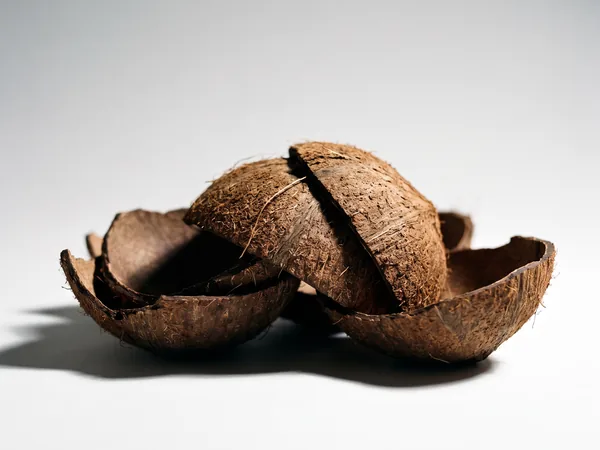
Coconut shell
~80% micropore fraction
A dense, near-uniform micropore network. Almost all of the internal surface sits in pores the size of a gas molecule — which is where gas-phase capacity comes from.
Best suited to: H₂S, VOCs, mercury vapor, solvents
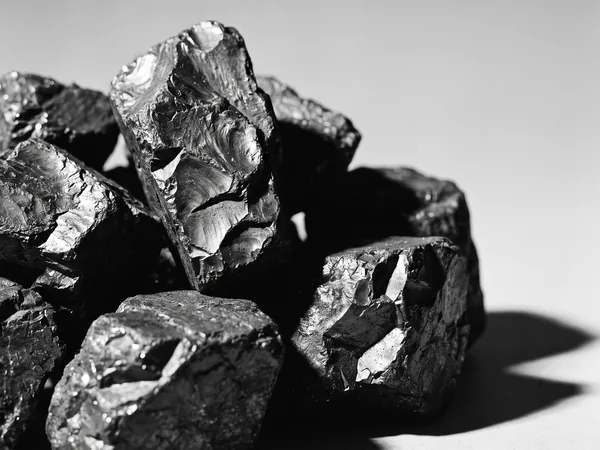
Coal
~40% micropore fraction
A mixed micro- and mesopore structure. Broader, so it handles a wider range of molecule sizes, but with less of the surface in the micropore range that small gas molecules need.
Best suited to: Broad duty, liquid and gas
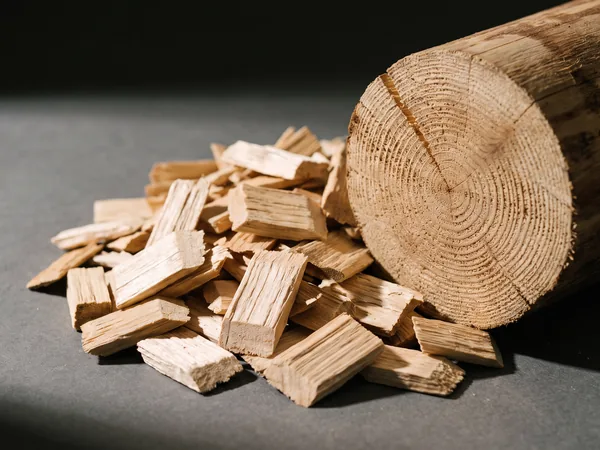
Wood
Low micropore fraction
Open macro- and mesopore channels. Large molecules can actually get in — which is exactly what a micropore-dominated carbon cannot offer them.
Best suited to: Decolorization, large molecules
The pore swatches in the table above are schematic — pore counts and sizes are drawn to make the structural difference legible, not measured. The only quantitative figure is the micropore fraction, which is the one published in the table.
What that buys you in service
Capacity where it counts
A micropore-dominated structure matches the molecular size of gas-phase contaminants, so more of the internal surface is actually reachable by the molecule you are trying to remove. Surface area you cannot reach does no work.
Hardness and fines
Above 95 on ball pan hardness, the granule survives handling, pneumatic filling and thermal cycling. Soft carbon generates fines, and fines mean pressure drop and carry-over into downstream equipment.
Lower impurity
Around 1.5% impurity against roughly 8% typical of coal-based carbon. That matters where extractable metals or acid-soluble ash would contaminate a product stream — hydrogen purification and food-adjacent gas duty in particular.
Where coconut shell is the wrong choice
Where ours comes from
Coconut shell is an agricultural by-product — the waste shell left after the flesh and water are taken. It is renewable on an annual cycle rather than a geological one, which is the substantive environmental difference from coal, and it does not compete with food production.
We source premium-grade shell from long-term partners across Kerala and Tamil Nadu, the southern Indian states where coconut is grown at scale. Our plant sits in Kerala for exactly that reason: short, consistent supply lines to the raw material, and a production capacity of 6,000 tonnes a year.
From shell to specification
- 1
Selection & preparation
AmbientShells cleaned, dried, crushed and sieved to uniform size.
- 2
Carbonization
600–700 °CHeated in an oxygen-limited environment, driving off tars, resins and water and leaving a fixed carbon matrix.
- 3
Steam activation
800–1000 °CIn a rotary kiln with steam, etching out the microporous network that does the adsorbing. This is the step that creates the structure in the diagram above.
- 4
Washing & neutralization
pH 6–8Washed to remove residual ash and soluble impurities; pH adjusted.
- 5
Drying, screening, packing
≤5% moistureScreened and graded to granular, pelletized or spherical, and packed under controlled conditions.
Temperature bands are plotted against a 0–1000 °C scale.